
Bullish On Crypto? Get Paid With A 36% Weekly Yield While You Wait
"BLOX ETF Could Replace Your Current Income Stream"

As you know by my name, I love dividends. And in addition to sharing on here, I write regularly on the investment platform- Seeking Alpha.
My goal there is to teach everyday investors about building wealth, so they won’t to need to work to traditional retirement age.
I want to help you take control of your life, have F.I.R.E.
Here at Dividend Collection Agency the goal is to give investors and/or readers a different perspective. We take a simple approach to building wealth. And although investing may seem easy, people often miss opportunities by over complicating it.
But we are here to help.

Current Price: $15.44
While I remain somewhat skeptical of crypto assets like Bitcoin (BTC-USD), their rapid adoption has made them difficult to ignore.
Recently, I added crypto exposure to my portfolio through the iShares Bitcoin Trust ETF (IBIT). However, another fund that has been on my radar for some time is the Nicholas Crypto Income ETF (BLOX).
With the ongoing crypto winter, it’s becoming increasingly difficult to ignore BLOX’s 36% distribution yield.
If you’ve followed my work for any amount of time, you know I recently launched a new portfolio focused entirely on generating income. That makes funds like BLOX particularly intriguing.
While I expect continued volatility for BLOX and other crypto-related assets, I remain long-term bullish on crypto due to its growing global acceptance. In my view, the recent sell-off appears largely driven by macro-driven liquidation rather than structural weakness.
As a result, I believe Bitcoin will eventually recover, and BLOX may become an interesting option for income-focused investors willing to tolerate volatility.
In the meantime, investors can collect weekly distributions currently equating to roughly a 36% yield while waiting for that recovery.
The Stock Recently 📈
Previously, BLOX had been outperforming peers like the YieldMax Crypto Industry & Tech Option Income ETF (LFGY), making it particularly appealing despite its short track record.
But more recently, BLOX has underperformed significantly, declining more than 21%, while the S&P 500 (SP500) is down only around 3% over the same period.
Strategy: Capital Appreciation 1st, Income 2nd 📉
What differentiates BLOX from many other crypto-focused ETFs is its “capital appreciation first, income second” strategy.
Rather than directly holding cryptocurrencies, BLOX gains exposure through a synthetic call strategy.
This means the fund generates exposure through options, rather than physically owning crypto assets.
Within its portfolio, BLOX holds other crypto-related ETFs such as:
Fidelity Wise Origin Bitcoin Fund ETF (FBTC)
iShares Ethereum Trust ETF (ETHA)
VanEck Bitcoin ETF (HODL)
These are among the ETF’s top holdings.
However, BLOX does not rely solely on crypto exposure.
The fund also holds growth companies with real earnings power, including:
NVIDIA (NVDA)
Taiwan Semiconductor (TSM)
Riot Platforms (RIOT)
In my opinion, this hybrid approach makes BLOX more appealing for long-term investors, as it blends crypto exposure with real operating businesses capable of generating growth.
However, like most covered-call style income funds, the strategy comes with risks.
The primary risk is high volatility, which is already common within the crypto ecosystem.
Crypto Volatility Continues ↕️
Over the past year, both Bitcoin and BLOX have experienced significant volatility.
Both assets are down double-digits, while the S&P 500 has gained over 20% during the same period.
In recent months, volatility increased further.
Both BTC-USD and BLOX declined roughly 38% during the recent crypto drawdown.
Since October, Bitcoin has pulled back sharply from its high near $126,000, and has largely traded within a range between $60,000 and $70,000.
At the time of writing, Bitcoin sits near $71,000.
Encouragingly, the past week has shown signs of stabilization.
Both Bitcoin and BLOX have moved higher, with BLOX leading the recovery and rising roughly 7.5% over the last five days.
How BLOX Attempts To Manage Risk ⚠️
To help reduce drawdowns, BLOX utilizes a put spread strategy.
This involves selling puts at multiple strike prices simultaneously, which helps limit downside risk during periods of elevated volatility.
This approach allows the fund to:
• Maintain larger distributions
• Provide partial protection against NAV erosion
However, investors should understand that selling puts does not eliminate downside risk entirely.
Recent NAV performance illustrates this clearly.
BLOX has experienced negative NAV growth across the past 1-, 3-, and 6-month periods due to the crypto sell-off.
Year-to-date, NAV has declined roughly 9%.
This marks a significant change from my previous article, when BLOX had delivered 16.95% and 25.48% NAV growth over the prior 1- and 3-month periods.
Distributions Have Declined Slightly 💸
Because covered-call funds rely heavily on underlying asset performance, distribution levels can fluctuate alongside NAV.
Back in October 2025, when Bitcoin was near its highs, BLOX distributions averaged approximately $0.18 per share.
Year-to-date, those distributions have declined to roughly $0.12 per share.
While any reduction in income is disappointing, the decline has been relatively modest considering the severity of the crypto pullback.
Expense Ratio Improvement 💲
Because BLOX is actively managed, it carries a higher expense ratio than passive ETFs.
However, the fund has actually reduced its expense ratio since my last article, declining from 1.03% to 0.99%.
Within the crypto income ETF space, this is relatively competitive.
For comparison:
NEOS Bitcoin High Income ETF (BTCI): 0.98%
YieldMax Bitcoin Option Income ETF (YBIT): ~1%
YieldMax Crypto Industry & Tech Option Income ETF (LFGY): 1.02%
For actively managed crypto strategies, I generally view expense ratios below 1% as fairly attractive.
Understanding Distribution Taxes 🧾
Another important consideration is tax treatment.
BLOX distributions consist of two components:
• Return of Capital (ROC)
• Net Investment Income
Return of capital can be tax-advantaged, as taxes are deferred until:
The investment is sold
Or the cost basis reaches zero
However, the net investment income portion is taxable, and high-income investors may also be subject to an additional 3.8% Net Investment Income Tax (NIIT).
Below is an example of the different thresholds depending on your filing status:

Here’s an example of how much you would owe should you go over the threshold:
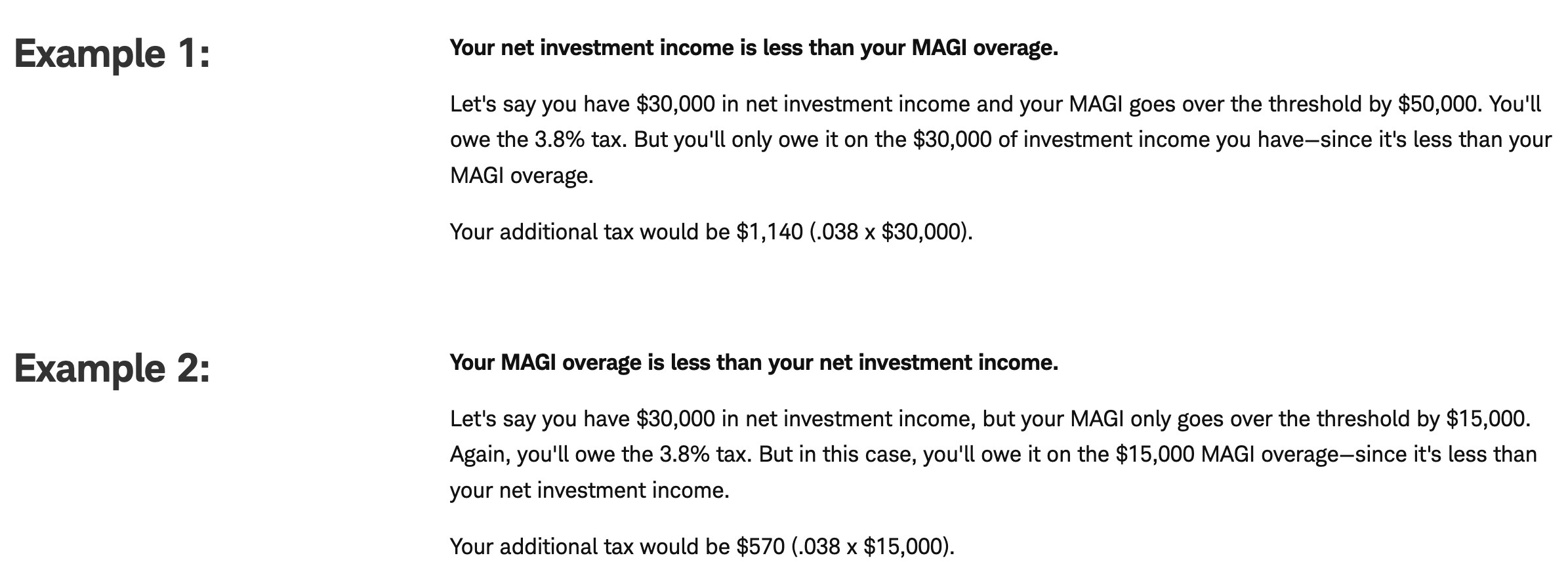
Because of this, BLOX may be better suited for tax-advantaged accounts such as IRAs or Roth accounts, depending on an investor’s tax situation.
How BLOX Likely Performs In Different Markets 🤔
Covered-call ETFs tend to perform differently depending on market conditions.
In crypto bear markets:
BLOX will likely underperform significantly, as declining crypto prices reduce option premiums and pressure NAV.
In sideways markets:
BLOX can perform quite well, as option income becomes the primary driver of returns.
In strong crypto bull markets:
BLOX will likely underperform Bitcoin itself, because covered calls cap upside potential.
However, investors may still see solid total returns thanks to the fund’s income generation.
Track Record So Far 📊
BLOX launched relatively recently, with an inception date of June 16, 2025.
Despite its short track record, the ETF has experienced a smaller drawdown than many peers, declining approximately 24.25% since inception.
This may be partially due to:
• Lower distribution levels relative to peers
• Exposure to growth companies like NVDA, COIN, and TSM
In comparison, some competing funds rely more heavily on futures contracts and treasury exposure.
Bottom Line ✅
If you are long-term bullish on crypto, the Nicholas Crypto Income ETF (BLOX) may be worth considering—particularly for investors focused on income generation.
Despite its short track record, the fund has demonstrated smaller drawdowns than many competing crypto income ETFs.
Additionally, the fund’s active management and weekly distributions help soften the blow during crypto downturns.
That said, BLOX remains a high-risk investment due to the inherent volatility of crypto assets.
However, for investors comfortable with that risk, the ETF’s 36% distribution yield and capital appreciation-first strategy may provide a compelling way to gain crypto exposure while generating significant income.
Do you have exposure to crypto assets? Let me know in the comments.
Happy Investing!
☎️ If you’re looking to create passive income and build your wealth from one of the top-rated analysts, book a call (Let’s Talk Investing or Detailed Portfolio Review) with me to get started.

If you’re looking to start investing check out our investment group over on Seeking Alpha.
Here’s How: Click the Seeking Alpha link here. Click investing group, subscribe now, or the blue hyperlink in my bio.

Not financial advice. For educational purposes only. I am not a licensed professional. Do your own due diligence.
Like & subscribe if you’re active duty, a veteran, or just love investing.