
Elevated CAPEX Is Stressing The Balance Sheet & Putting The Dividend At Risk
"ORCL's Pullback Is A Long-Term Buying Opportunity"

As you know by my name, I love dividends. And in addition to sharing on here, I write regularly on the investment platform- Seeking Alpha.
My goal there is to teach everyday investors about building wealth, so they won’t to need to work to traditional retirement age.
I want to help you take control of your life, have F.I.R.E.
Here at Dividend Collection Agency the goal is to give investors and/or readers a different perspective. We take a simple approach to building wealth. And although investing may seem easy, people often miss opportunities by over complicating it.
But we are here to help.
Current Price: $114.85
Dividend: $0.50
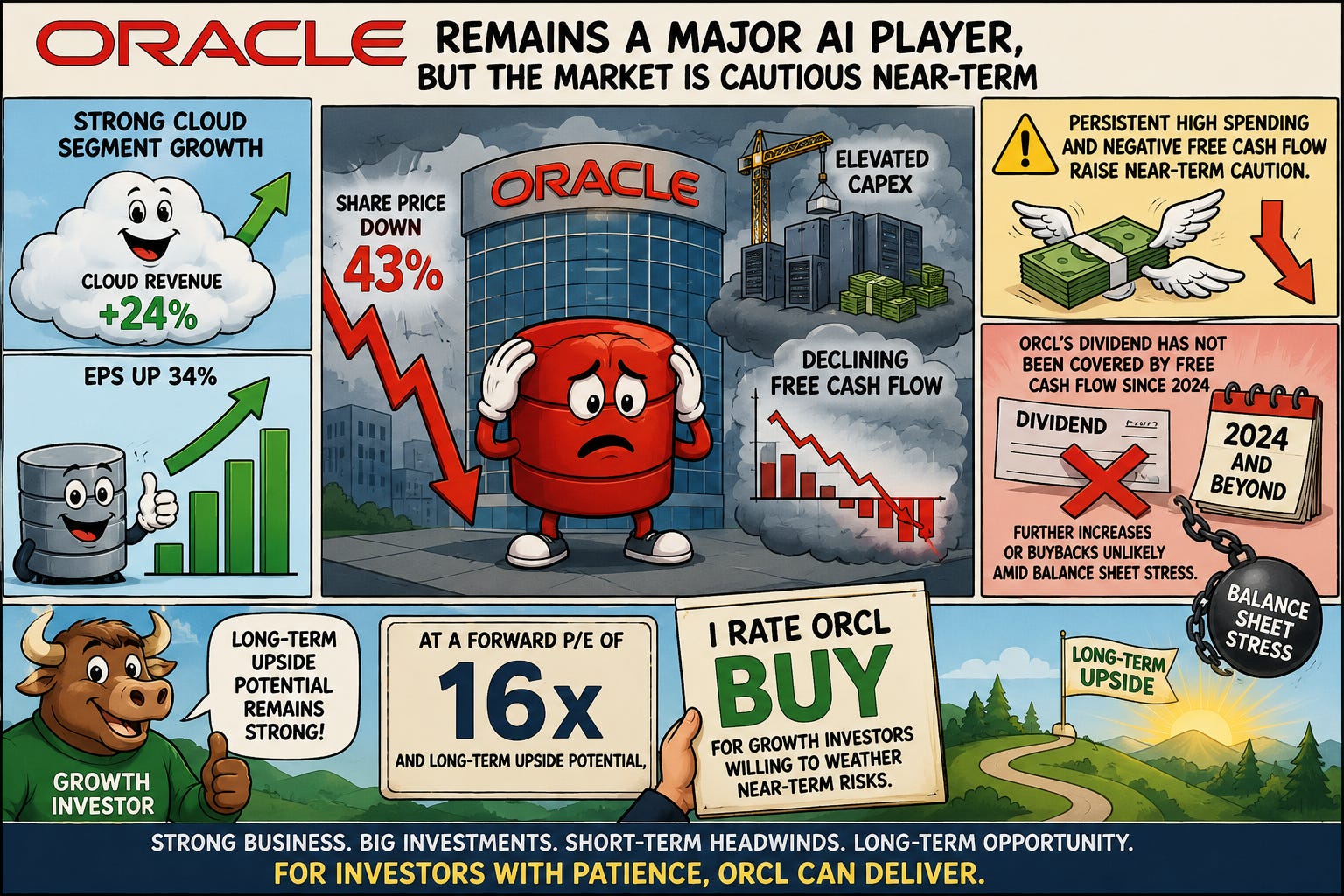
Artificial intelligence continues to dominate the investment landscape in 2026, and I expect AI to remain one of the market’s largest long-term growth drivers.
As companies race to build the infrastructure powering the next generation of AI, many technology leaders are investing at unprecedented levels.
Oracle (ORCL) is one of those companies.
The enterprise software giant has dramatically increased capital spending to expand its cloud infrastructure and AI capabilities. While those investments should strengthen Oracle’s competitive position over the long run, they have come at a significant short-term cost.
Free cash flow has deteriorated, leverage has increased, and investor sentiment has weakened—helping drive Oracle shares roughly 43% lower over the past year.
Despite those headwinds, I believe today’s valuation creates an attractive long-term opportunity for investors who are willing to remain patient.
Oracle Remains a Major AI Infrastructure Player 🤖
Founded in 1977, Oracle has evolved into one of the world’s largest enterprise software companies with a market capitalization exceeding $400 billion.
Today, the company generates revenue across four primary businesses:
Cloud
Software
Hardware
Services
Cloud has become Oracle’s primary growth engine, fueled by soaring demand for AI infrastructure and enterprise cloud computing.
As organizations continue shifting workloads to the cloud while building AI applications, Oracle appears well positioned to benefit over the next decade.
Strong Earnings Were Overshadowed by Massive Spending 💪🏾
Oracle’s latest fiscal year produced impressive operating results.
Highlights included:
Revenue increased 17%
EPS jumped 34%
Operating income climbed from $17.7 billion to $20.6 billion
Net income increased from $12.4 billion to $17.1 billion
Cloud remained the standout performer.
Cloud revenue grew 39%
Cloud Infrastructure revenue surged 93%
Hardware revenue increased 5%
Services revenue grew nearly 10%
On the surface, these were strong results.
However, investors were focused elsewhere.
Wall Street Wants Free Cash Flow—Not Bigger CapEx 💵
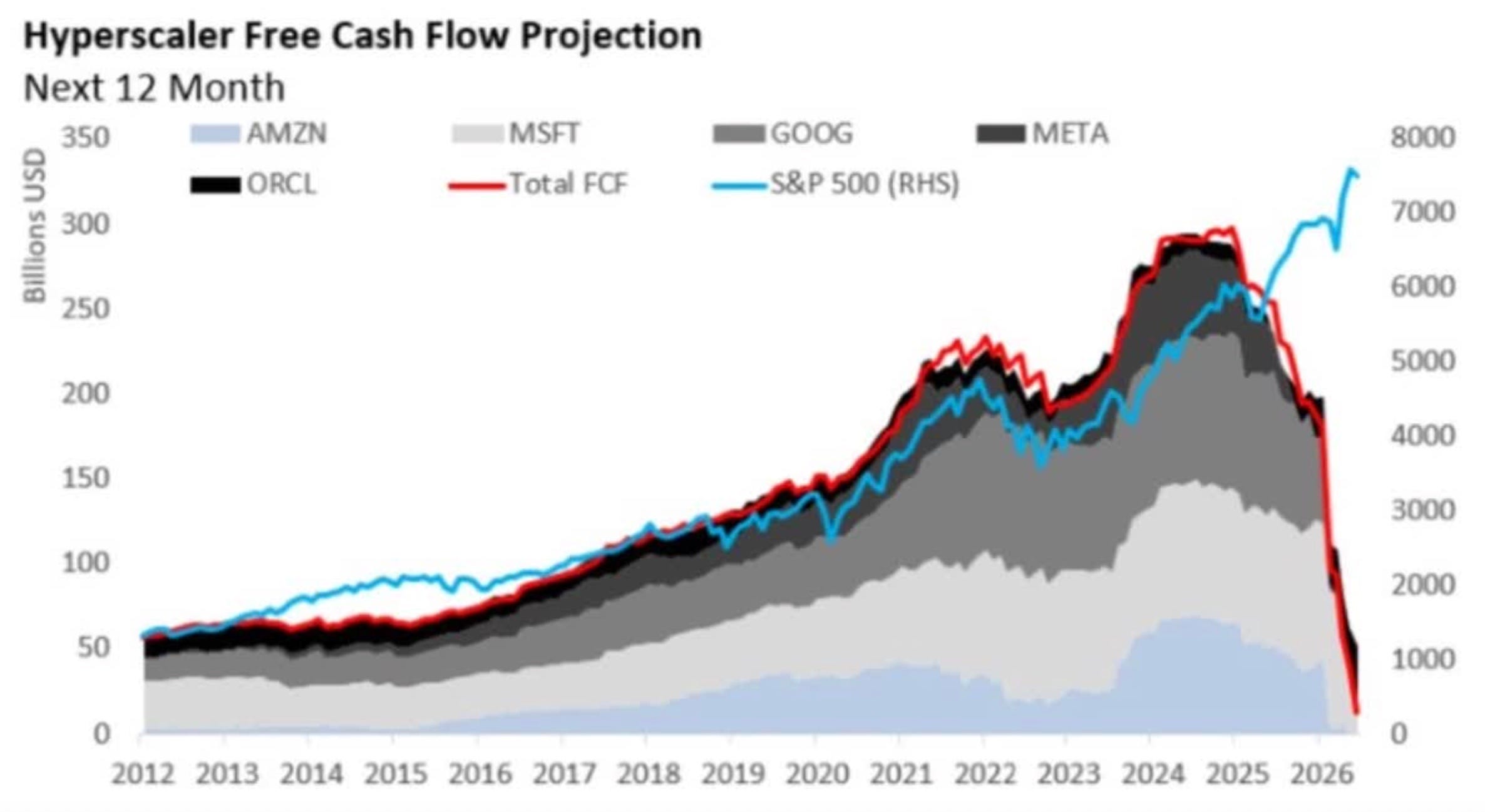
Like Microsoft (MSFT), Amazon (AMZN), Alphabet (GOOG), and Meta (META), Oracle is spending aggressively to win the AI race.
Capital expenditures exploded 162% during fiscal 2026 to approximately $56 billion, and management expects another $70 billion in capital spending during fiscal 2027.
Those investments should support future cloud growth.
Unfortunately, they have also crushed free cash flow.
Today’s market is rewarding companies that can successfully balance AI investments with healthy cash generation.
Oracle currently isn’t doing that.
As a result, investors have become increasingly cautious.
Revenue Outlook Remains Excellent ↗️
Despite the short-term concerns, management continues guiding for strong growth.
Current expectations include:
Revenue increasing from $67.4 billion to approximately $90 billion
EPS rising roughly 38% to about $8.05
Excluding the Ampere transaction, earnings growth would still be approximately 18%
Those remain impressive numbers.
The question isn’t whether Oracle can grow.
The question is whether that growth eventually translates into stronger cash flow.
Free Cash Flow Is the Biggest Risk ⚠️
As a dividend investor, I always begin my analysis with one question:
Can the company comfortably fund its dividend? Right now, Oracle cannot.
The company has failed to fully cover its dividend with free cash flow since 2024.
Fiscal 2025
Capital expenditures reached $21.2 billion
Operating cash flow totaled approximately $20.3 billion
Dividend payments reached $4.74 billion
Fiscal 2026
Free cash flow fell to approximately negative $394 million
Dividend payments increased to roughly $5.8 billion
That’s a trend worth monitoring.
Although Oracle’s dividend yield is relatively modest, prolonged negative free cash flow limits management’s financial flexibility.
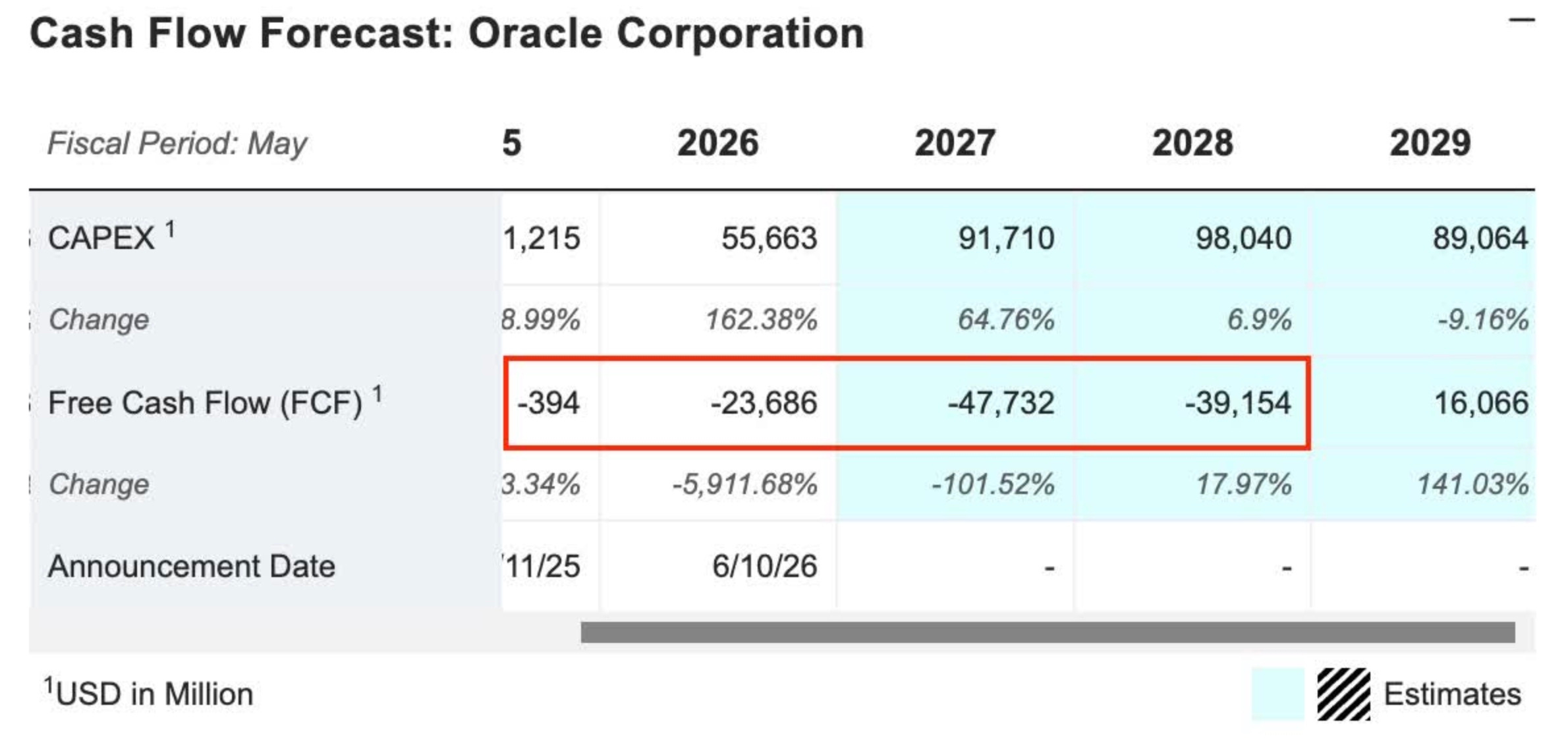
At the same time, Oracle has increased borrowing to finance its infrastructure expansion, placing additional pressure on the balance sheet.
Management has approximately $31 billion in cash, but debt continues to rise as capital spending accelerates.
I don’t expect Oracle to cut its dividend.
However, I also don’t expect meaningful dividend increases or aggressive share repurchases until free cash flow improves.
For investors, the key metrics to monitor remain:
Free cash flow
Operating margins
Capital expenditures
Debt levels
Valuation Looks Attractive 🤩
Despite the concerns, Oracle now trades at a valuation that appears increasingly compelling.
Using management’s fiscal 2027 EPS guidance of approximately $8.05, shares trade around 16x forward earnings.
For comparison:
Microsoft trades near 23x
IBM (IBM) trades around 23x
Many large software companies trade near 25x
Part of Oracle’s discount is justified.
Unlike Microsoft, Oracle has not consistently covered its dividend with free cash flow over the past two years.
Still, much of that discount appears tied to temporary spending rather than deteriorating demand.
If management eventually delivers stronger free cash flow, today’s valuation could prove to be an attractive long-term entry point.
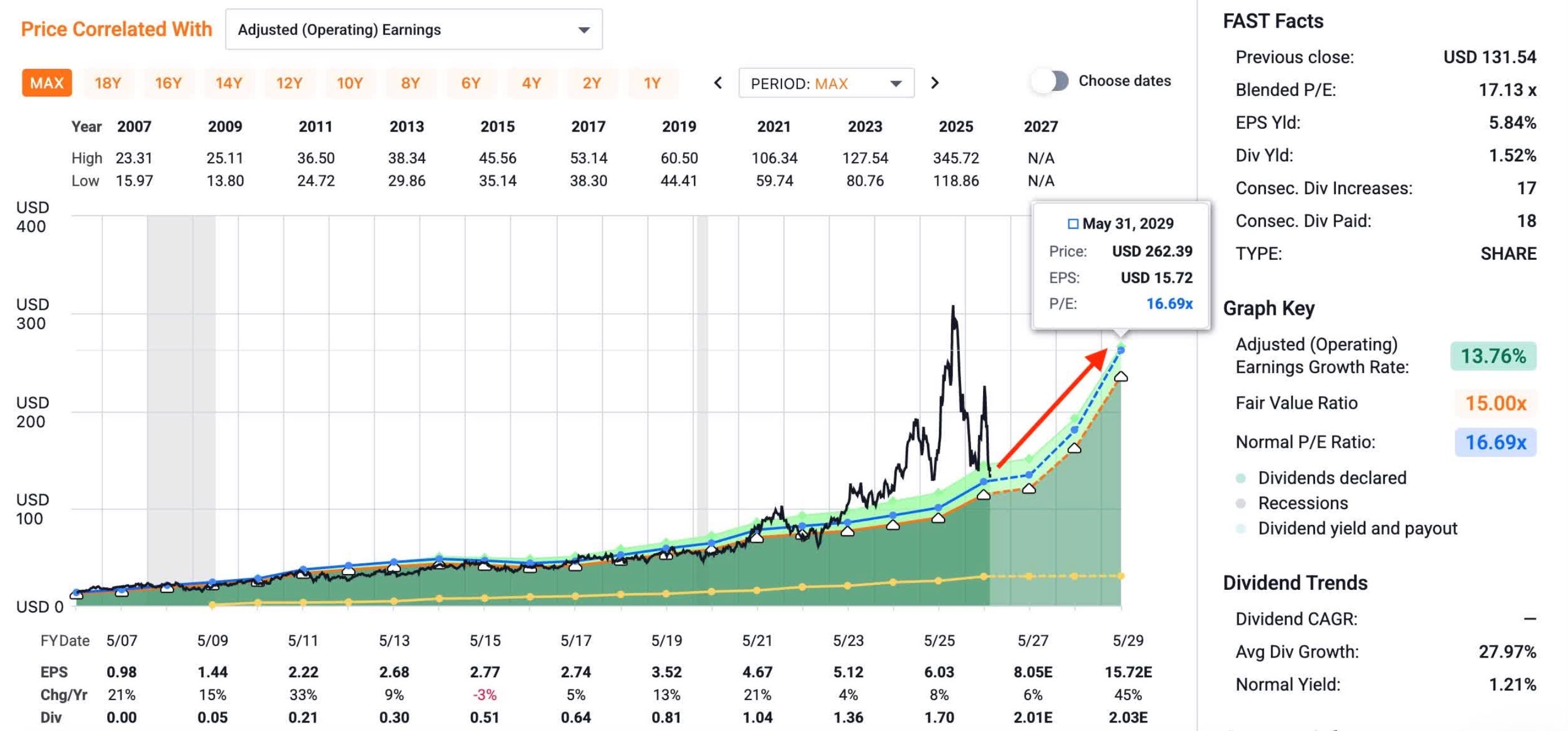
If you’re looking for a stock analyzer tool that gives you future price targets based on historical data, use my code to get 25% off of FAST Graphs, my go-to the stock analyzer tool for research.
Longer term, valuation expansion combined with earnings growth could create meaningful upside.
Final Thoughts ✅
Oracle’s aggressive investment strategy has created significant short-term pressure on margins, free cash flow, and investor sentiment.
That’s exactly why shares have struggled.
However, I also believe those same investments position Oracle to remain one of the leading AI infrastructure providers over the next decade.
The stock may continue experiencing volatility while elevated capital expenditures persist.
But for long-term investors focused on future earnings power rather than near-term free cash flow, today’s valuation offers an attractive risk/reward opportunity.
RATING: BUY
Does the fact the Oracle has not covered their dividend recently stop you from buying?
Let me know what you think in the comments.
💰 Happy Investing 💰
☎️ If you’re looking to create passive income and build your wealth from one of the top-rated analysts, book a call (Let’s Talk Investing or Detailed Portfolio Review) with me to get started.
If you’re looking to start investing check out our investment group over on Seeking Alpha.
Here’s How: Click the Seeking Alpha link here. Click investing group, subscribe now (GET AN INVESTING GROUP FREE TRIAL), or the blue hyperlink in my bio.
Not financial advice. For educational purposes only. I am not a licensed professional. Do your own due diligence.
Like & subscribe if you’re active duty, a veteran, or just love investing.