
Is This 17% Yielder Better Than QQQI & JEPQ?
"A Relatively New Covered Call Fund To Add To Your Watchlist"

As you know by my name, I love dividends. And in addition to sharing on here, I write regularly on the investment platform- Seeking Alpha.
My goal there is to teach everyday investors about building wealth, so they won’t to need to work to traditional retirement age.
I want to help you take control of your life, have F.I.R.E.
Here at Dividend Collection Agency the goal is to give investors and/or readers a different perspective. We take a simple approach to building wealth. And although investing may seem easy, people often miss opportunities by over complicating it.
But we are here to help.
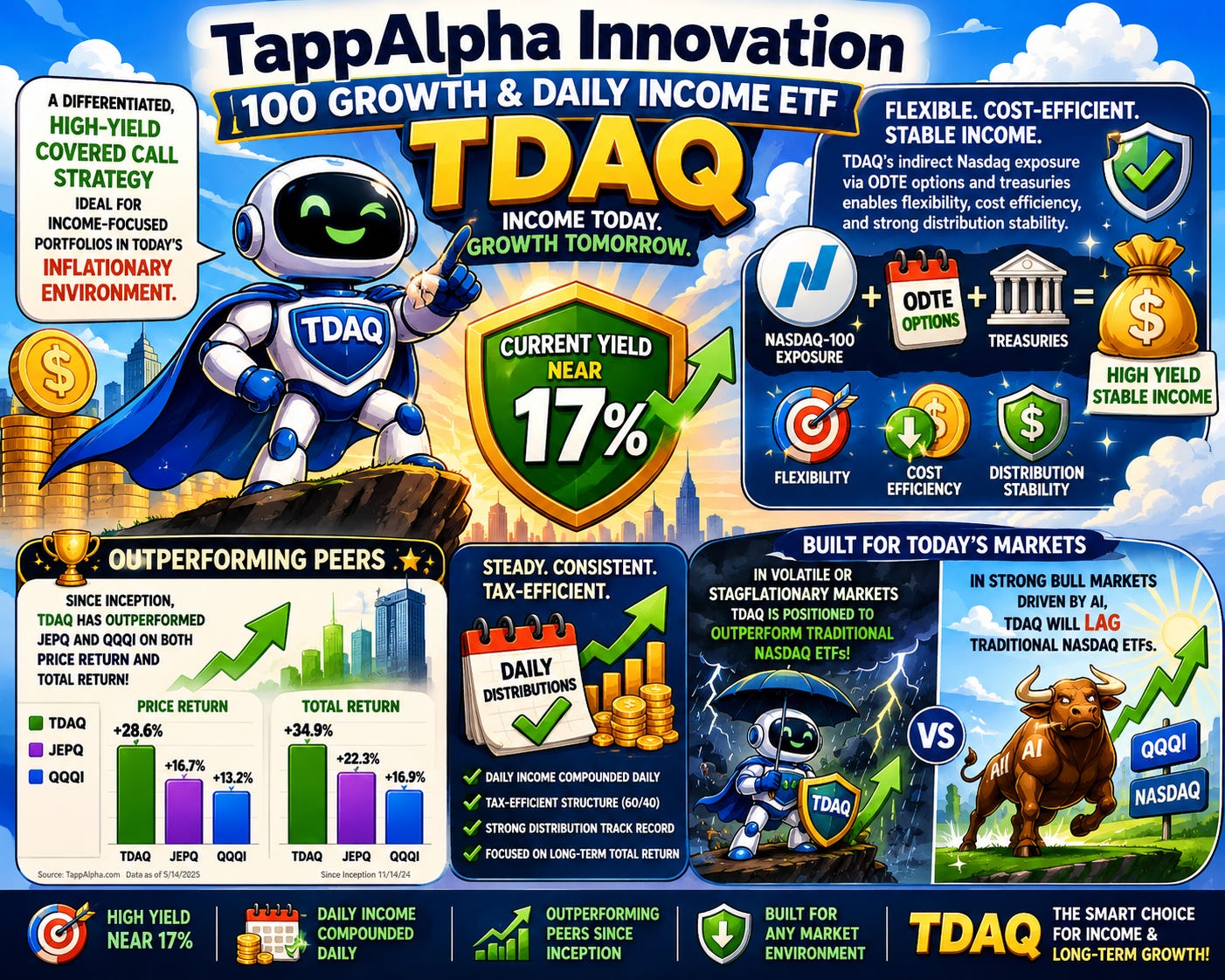
Current Price: $29.12
Current Yield: ~17%
The current market environment is becoming increasingly attractive for covered call ETFs.
While many investors remain cautious toward the space—and for good reason—I believe that buying and holding select covered call funds within a diversified portfolio can be an effective long-term strategy for income-oriented investors.
Like any investment category, it’s important to separate the wheat from the chaff. While many covered call ETFs advertise eye-catching double-digit yields, some generate those payouts at the expense of long-term capital preservation, ultimately defeating the purpose of income investing.
Today, I want to discuss the TappAlpha Innovation 100 Growth & Daily Income ETF (TDAQ), how it operates, how it is likely to perform across various market environments, and why I believe the current backdrop makes it an attractive option for income-focused investors.
The Growing Demand For Income 💰
Over the past several years, investors have been focused on two dominant themes: inflation and artificial intelligence.
While the United States continues positioning itself as a global AI leader, inflation remains a persistent challenge for consumers. Recent CPI data showed inflation accelerating to 3.8%, moving further away from the Federal Reserve’s 2% target, largely due to higher energy prices stemming from ongoing geopolitical tensions.
Although investors remain hopeful that inflation pressures will ease, I believe inflation is likely to remain elevated for the foreseeable future. Higher inflation has also pushed expectations for rate cuts further into the future, with some market participants even discussing the possibility of additional rate hikes.
Personally, I don’t expect the Federal Reserve to raise rates again. Instead, I believe policymakers are more likely to keep rates elevated for longer, potentially into 2027.
Regardless of the Fed’s next move, the reality is that many consumers continue facing affordability challenges. Credit card balances remain elevated, borrowing costs remain high, and household budgets are increasingly stretched.
Simply put, investors are looking for more income.
That helps explain why derivative income ETFs have exploded in popularity over the past several years.
According to Bloomberg data, derivative-income ETFs have experienced significantly faster growth than traditional dividend ETFs since 2023. In my view, that’s not a coincidence.
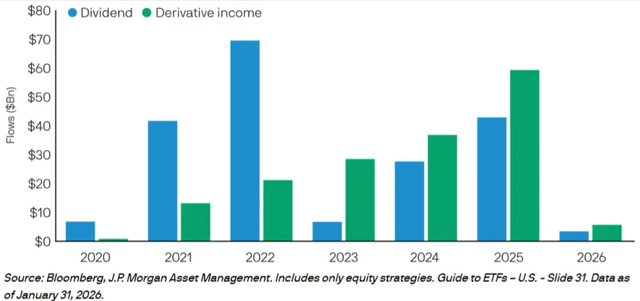
Traditional dividend ETFs often provide yields in the 3%-4% range. While those yields can be attractive, many investors today are seeking substantially higher cash flow to offset inflation and rising living costs.
Covered call ETFs fill that gap, with many generating yields above 10%.
The challenge, however, is finding funds that can generate high income without destroying shareholder capital over time.
That’s where TDAQ stands out.
Understanding TDAQ 🧠
TDAQ launched on September 4, 2025, making it a relatively new entrant to the covered call ETF space.
Although some investors may view its short operating history as a negative, the fund’s early performance has been impressive—particularly when compared to more established competitors such as the JPMorgan Nasdaq Equity Premium Income ETF (JEPQ) and the NEOS Nasdaq-100 High Income ETF (QQQI).
One of the most unique aspects of TDAQ is its structure.
Unlike JEPQ and QQQI, which hold baskets of individual equities, TDAQ gains its exposure to the Nasdaq-100 indirectly.
Rather than directly owning dozens of technology stocks, TDAQ primarily utilizes Invesco’s Nasdaq-100 ETF (QQQM) while generating income through a systematic zero-days-to-expiration (0DTE) options strategy.
By selling same-day options contracts, the fund harvests option premium while minimizing time exposure. This approach also provides management with greater flexibility to adjust positioning as market conditions change.
Additionally, TDAQ maintains exposure to U.S. Treasuries, creating another source of income while helping support liquidity and risk management.
The results so far have been encouraging.
Compared to JEPQ and QQQI, TDAQ has generated stronger price appreciation since launch. While JEPQ and QQQI have delivered respectable returns, TDAQ has consistently outperformed both on a price-return basis.
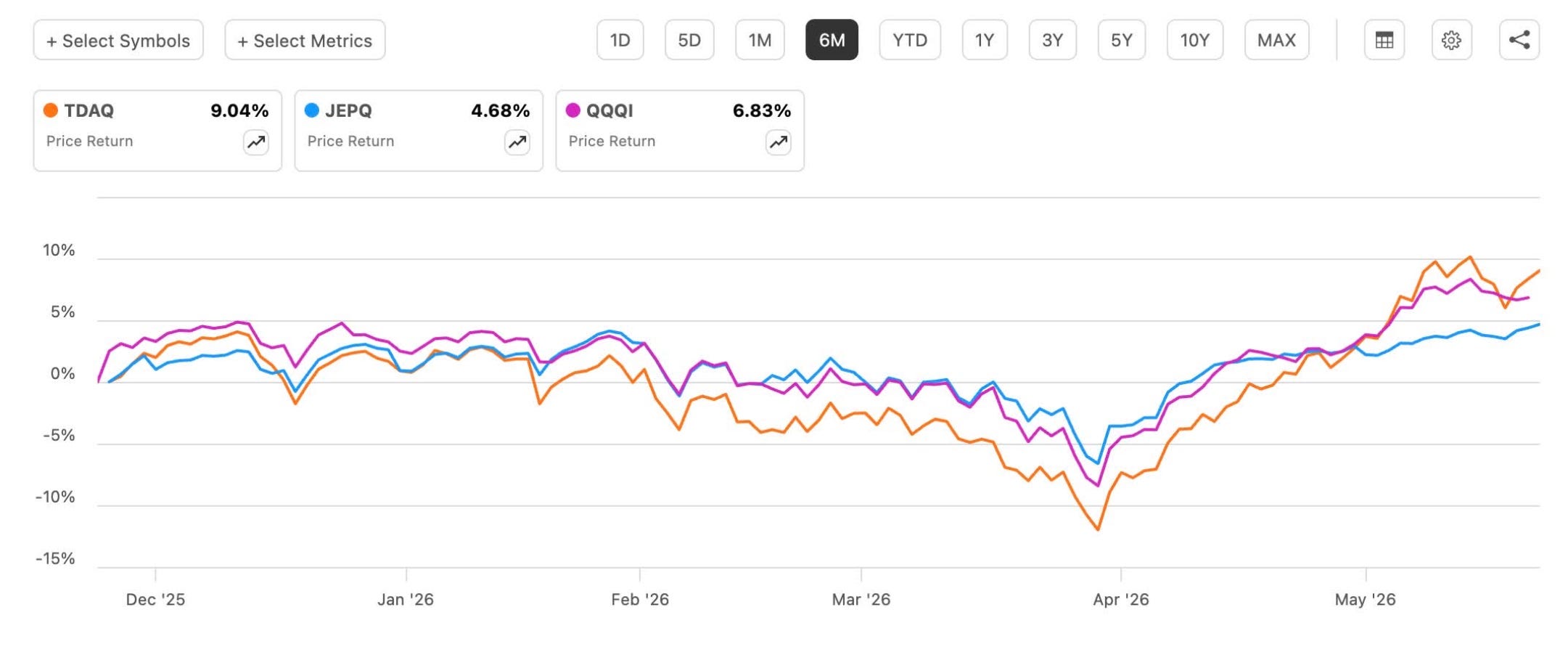
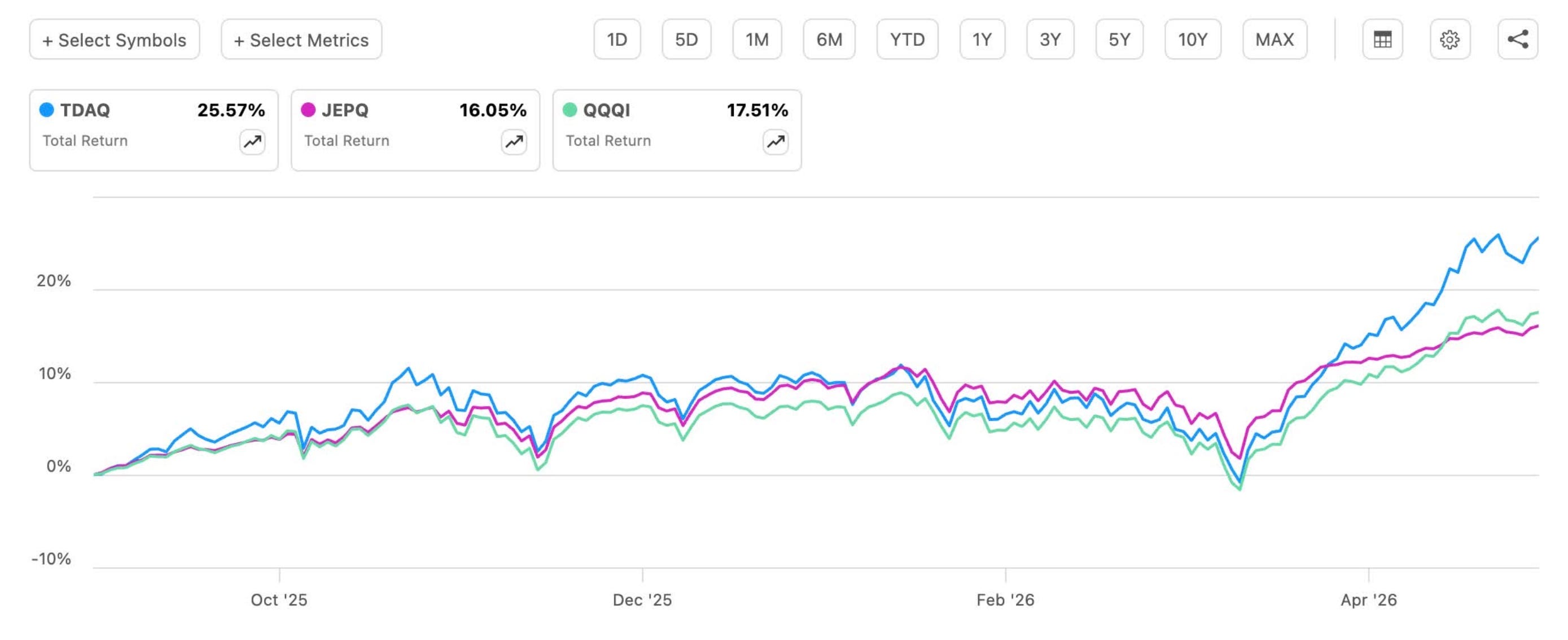
When distributions are included, the gap widens further.
Since inception, TDAQ has generated a total return approaching 26%, outperforming both peers despite its shorter track record.
While JEPQ offers the lowest expense ratio at 0.35%, TDAQ’s 0.68% expense ratio remains reasonable relative to many high-income strategies. In my view, any actively managed income fund charging less than 1% deserves consideration, provided management can consistently deliver results.
Investor interest appears to be growing as well.
During my previous coverage in December, TDAQ managed approximately $47 million in assets. Today, assets under management have climbed to roughly $198 million—an increase of more than 300% in just five months.
That rapid growth suggests investors are beginning to recognize the strategy’s potential.
Capital Preservation Matters 💵
One of the biggest risks with covered call investing is capital erosion.
Many income-focused investors become fixated on yield while ignoring the underlying asset value. A fund can pay a 15% yield, but if net asset value declines by 20%, investors are effectively moving backward.
This is one reason I pay close attention to NAV performance.
Since inception, TDAQ’s NAV has increased approximately 18.6%. Over the past year, NAV growth has exceeded 14%.
While the track record remains short, these results suggest the fund has thus far achieved what many covered call ETFs struggle to do: generate substantial income while preserving capital.
The distribution profile has also remained remarkably consistent.
Since launch, TDAQ has averaged approximately $0.38 per share in monthly distributions while maintaining stability despite varying market conditions.
Perhaps equally important is the tax treatment.
Nearly all distributions paid since inception have been classified as return of capital (ROC).
While return of capital is often misunderstood, it can be highly beneficial for taxable investors. ROC distributions generally defer taxes until shares are sold or cost basis reaches zero, making them attractive for investors seeking tax-efficient cash flow.
For younger investors building income portfolios in taxable accounts, this structure can be particularly appealing.
How TDAQ May Perform In Different Markets ↕️
Investors should understand that TDAQ is not designed to outperform the Nasdaq (NDAQ) during powerful bull markets.
Because the fund sells call options against its exposure, upside participation will always be somewhat capped.
If artificial intelligence continues driving technology stocks significantly higher, investors holding QQQM directly will likely outperform TDAQ.
In fact, we’re already seeing evidence of this.
QQQM currently holds a slight edge in total return as technology stocks continue benefiting from strong AI-related momentum.
However, the environment changes dramatically when markets become less cooperative.
During flat markets, volatile markets, or periods of stagflation, TDAQ’s option-selling strategy becomes increasingly valuable. Higher volatility generally leads to higher option premiums, creating additional income opportunities.
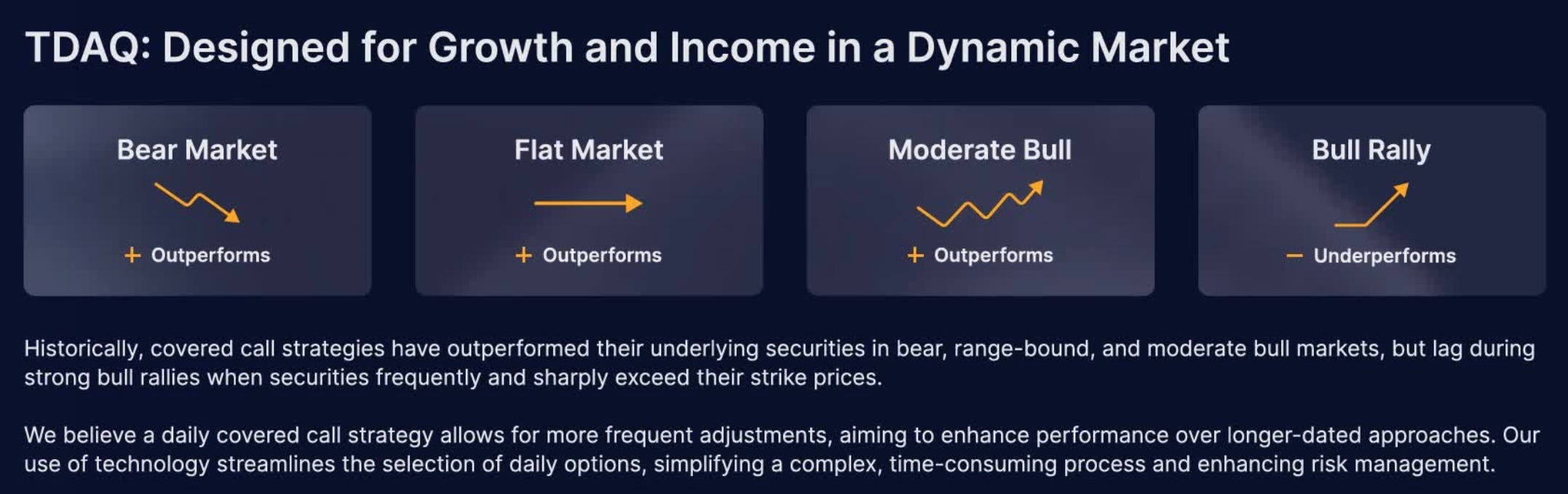
That income can help offset market weakness while providing investors with a meaningful cash flow stream.
If inflation remains stubborn and economic growth slows—a scenario many economists continue discussing—TDAQ appears particularly well positioned.
In those environments, investors often prioritize income generation and downside resilience over maximizing upside participation.
That’s exactly the type of environment where covered call strategies historically shine.
Bottom Line ✅
Covered call ETFs are not suitable for every investor.
They involve unique risks, including capped upside and potential NAV erosion during prolonged downturns. Investors should understand those tradeoffs before allocating capital.
That said, I believe TDAQ deserves consideration among the growing universe of covered call ETFs.
Its differentiated 0DTE strategy, indirect Nasdaq exposure, growing asset base, tax-efficient distributions, and strong early performance distinguish it from many competing products.
If you believe artificial intelligence will continue driving a powerful technology bull market for years to come, owning QQQM outright is probably the better choice.
However, if you believe inflation will remain elevated, volatility will increase, or market returns will moderate from recent highs, TDAQ appears well-positioned to deliver attractive risk-adjusted income.
For investors seeking a high-yield ETF capable of generating substantial cash flow while preserving capital, TDAQ is quickly becoming one of the more compelling funds in the covered call space.
Are you using covered call ETFs for income? Which ones do you like? Let me know in the comments.
Just a note to let readers know I will be going paid soon. Be on the lookout for the article laying out the details. Feel free to provide any feedback!
Happy Investing!
☎️ If you’re looking to create passive income and build your wealth from one of the top-rated analysts, book a call (Let’s Talk Investing or Detailed Portfolio Review) with me to get started.
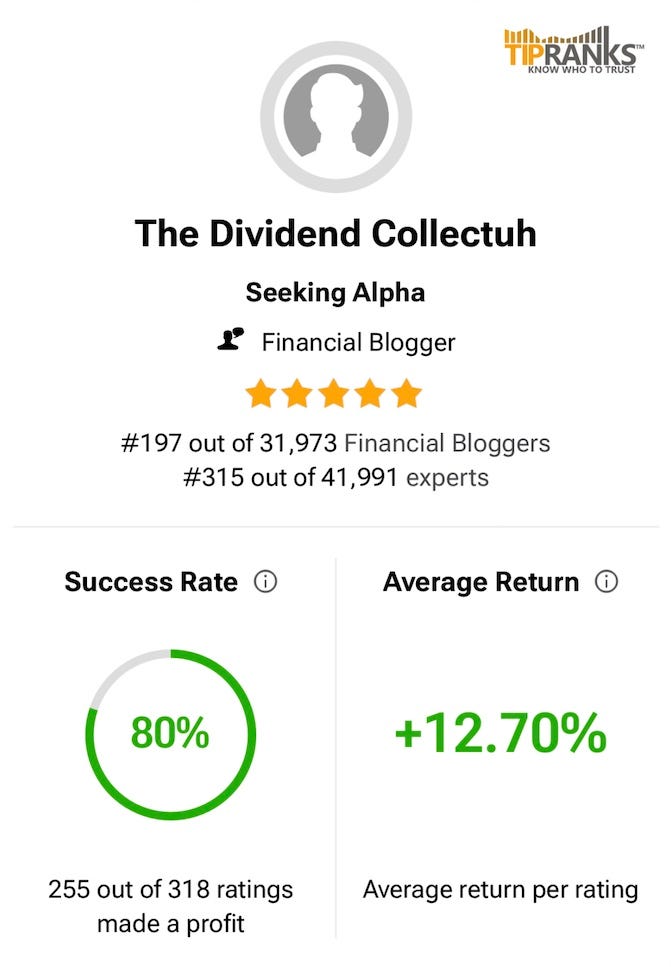
If you’re looking to start investing check out our investment group over on Seeking Alpha.
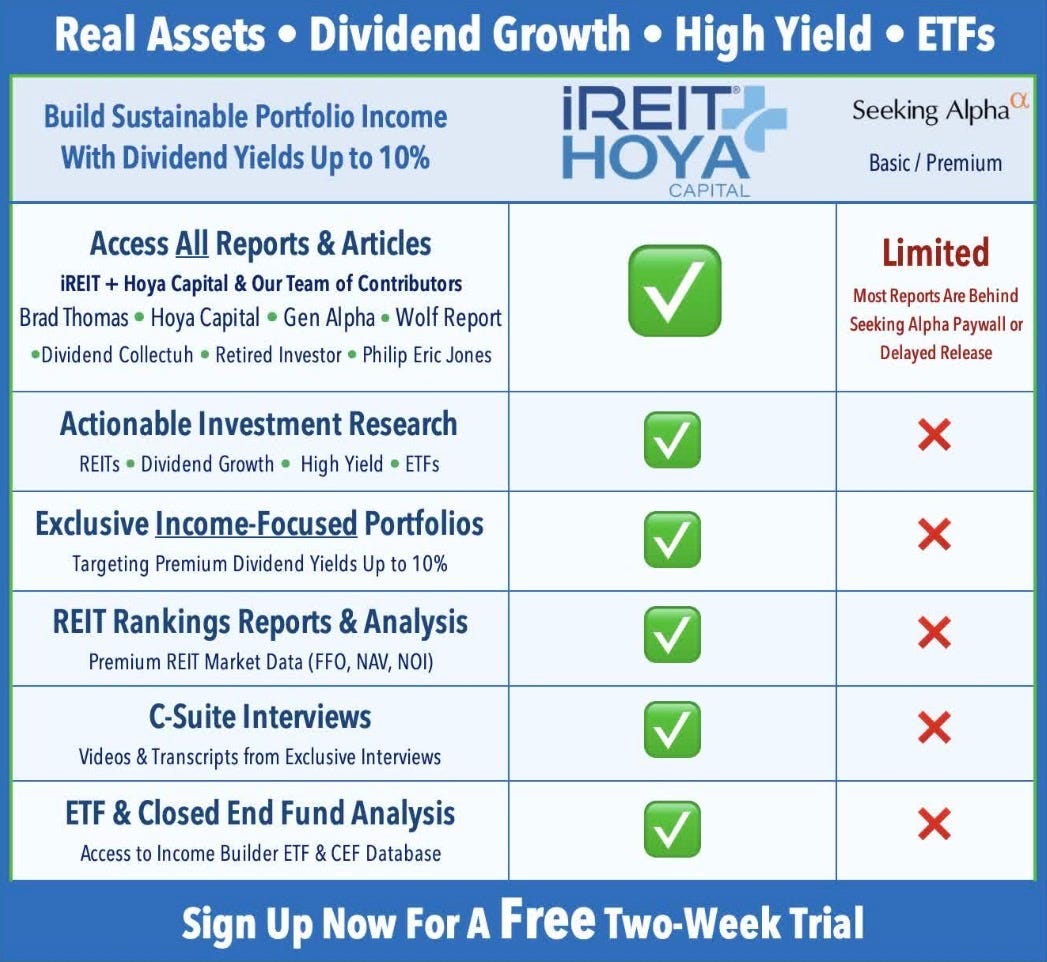
Here’s How: Click the Seeking Alpha link here. Click investing group, subscribe now (GET AN INVESTING GROUP FREE TRIAL), or the blue hyperlink in my bio.
Not financial advice. For educational purposes only. I am not a licensed professional. Do your own due diligence.
Like & subscribe if you’re active duty, a veteran, or just love investing.