

As you know by my name, I love dividends. And in addition to sharing on here, I write regularly on the investment platform- Seeking Alpha.
My goal there is to teach everyday investors about building wealth, so they won’t to need to work to traditional retirement age.
I want to help you take control of your life, have F.I.R.E.
Here at Dividend Collection Agency the goal is to give investors and/or readers a different perspective. We take a simple approach to building wealth. And although investing may seem easy, people often miss opportunities by over complicating it.
But we are here to help.
Current Price: $64.06
Dividend/Yield: $2.04/3.20%
Over the past year, the consumer landscape has quietly begun to shift. Between the rise of weight-loss drugs and a broader push toward healthier lifestyles—amplified by movements like Robert F. Kennedy Jr.’s MAHA campaign—demand for certain food categories is evolving.
One category that continues to stand out is protein.
And that’s exactly where Tyson Foods (TSN) finds itself well-positioned.
After its latest earnings report, Tyson’s stock surged to a new 52-week high, reflecting renewed investor confidence in the company’s turnaround. While the momentum is undeniable, the key question now becomes:
👉 Is there still meaningful upside left?
A Look Back: Early Signs Of Stabilization 📖
Last November, the company was navigating a challenging environment. Inflationary pressures, margin compression, and uneven segment performance were weighing on results.
Still, there were clear signs of improvement.
Tyson closed out 2025 with solid momentum:
Earnings per share climbed 33% to $4.12
Revenue increased 3.3% to $54.4 billion
The dividend remained well-covered with a payout ratio of 58%
Performance across segments was mixed but improving. Beef and Chicken posted respectable sales growth, while Pork continued to lag. Despite this, overall results were supported by higher volumes and steady demand for protein products.
However, one key signal stood out at the time: the company’s dividend increase failed to keep pace with inflation. That suggested that while operations were improving, underlying pressures had not fully disappeared.
Since then, the stock has rewarded investors. Shares of Tyson have climbed roughly 16%, significantly outperforming the broader market, while the S&P 500 has experienced increased volatility.
Momentum Continues, But Not Without Friction 📊
Tyson’s most recent quarter reinforced the idea that the company’s turnaround is gaining traction.
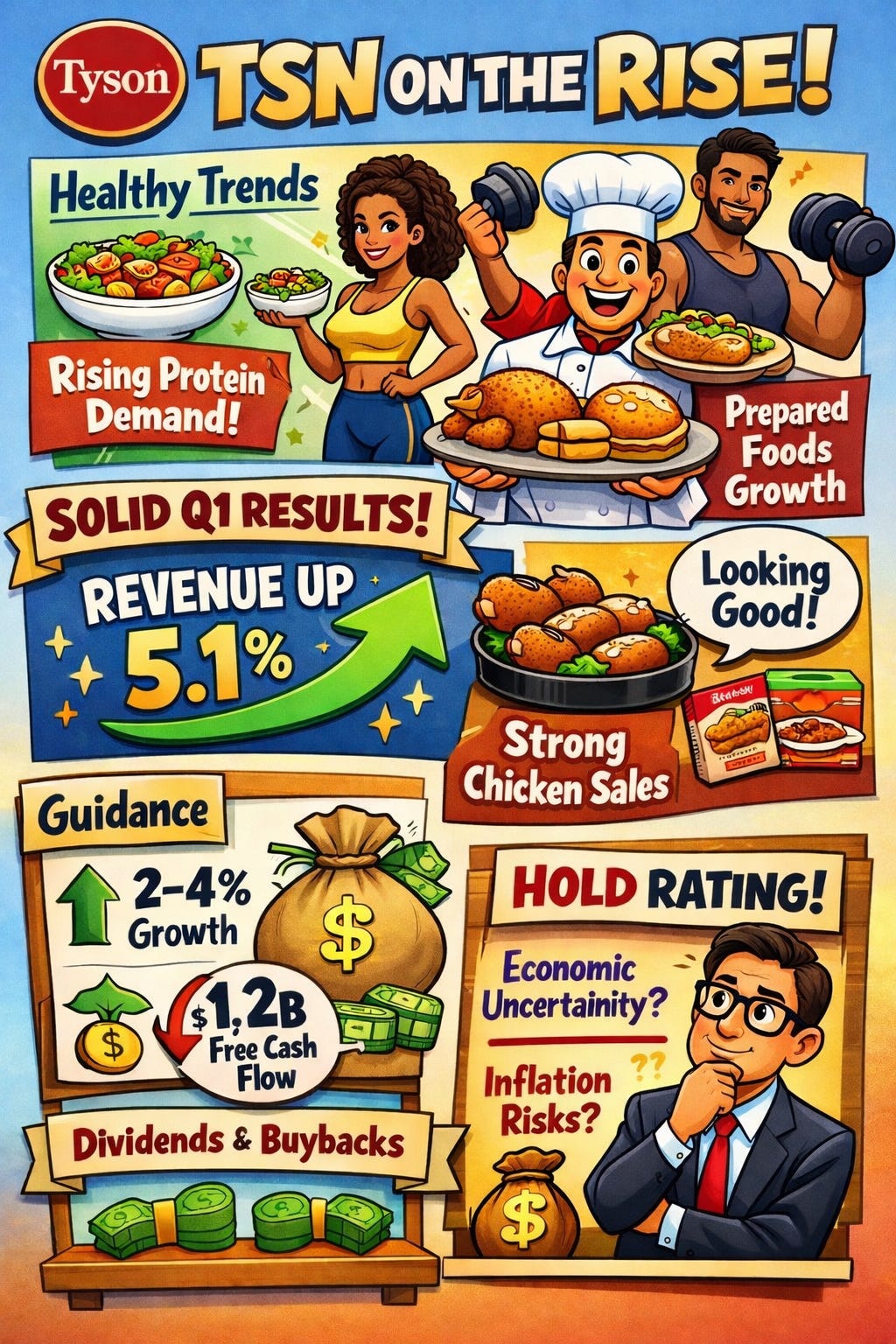
Revenue grew 5.1% year-over-year to $14.3 billion, driven by a 6.2% increase in sales. The company also delivered a modest earnings beat, reporting $0.97 per share.
At first glance, the results appear strong. But a deeper look reveals some ongoing challenges.
Operating income declined 13% to $572 million, highlighting continued margin pressure. This suggests that while demand is improving, cost dynamics remain a headwind.
From a segment perspective, performance was encouraging overall:
Chicken stood out with double-digit volume growth, benefiting from its relative affordability compared to other proteins.
Pork showed signs of stabilization, with modest declines in sales but improving volumes.
Beef remained under pressure, as constrained cattle supply and elevated costs weighed on profitability.
One of the more notable takeaways from the quarter was Tyson’s ability to grow volumes despite a broader decline in total food and beverage consumption. While industry-wide volumes fell 1.8%, Tyson managed to expand across key segments.
This reinforces a critical point: protein demand remains resilient, even in a tighter consumer environment.
Growth Drivers: Chicken And Prepared Foods Lead The Way 🐔
Looking ahead, Tyson’s growth story appears increasingly tied to two key segments: Chicken and Prepared Foods.
Chicken continues to benefit from strong consumer demand, particularly as households look for more affordable protein options amid lingering inflation. The segment’s volume growth suggests that this trend is not only intact but accelerating.
Prepared Foods also delivered solid results, with sales rising 8.1% year-over-year. While volume growth was modest, the segment benefits from higher margins and brand strength, making it an important contributor to overall profitability.
Together, these segments provide a foundation for more stable and predictable growth going forward.
Guidance: Stable, But Not Explosive ➡️
Tyson’s full-year guidance reflects a company that is stabilizing rather than accelerating.
Management expects revenue growth between 2% and 4%, alongside free cash flow that exceeds last year’s $1.2 billion.
While the lower end of that range suggests some caution, I believe the company is more likely to trend toward the higher end, assuming inflation remains contained.
That said, the outlook also highlights an important reality: Tyson is not currently positioned for rapid growth. Instead, it is in a phase of steady recovery and operational improvement.
Dividend And Balance Sheet: A Clear Strength ⚖️
One of the most encouraging aspects of Tyson’s story is its improving financial position.
Free cash flow for the quarter totaled $690 million, comfortably covering the $177 million paid out in dividends. This provides a strong margin of safety and reinforces the sustainability of the company’s payout.
In addition, Tyson continues to make progress on its balance sheet:
Leverage has improved to 2.0x, down from 3.9x just two years ago
Long-term debt has been reduced meaningfully
Liquidity remains robust at $4.5 billion
This combination of improving cash flow and deleveraging positions the company well for future capital allocation, including dividends and share repurchases.
Valuation: The Market Has Taken Notice 📈
While Tyson’s fundamentals are improving, the stock’s valuation reflects much of that progress.
At a forward P/E of 16.4x, Tyson now trades above the sector median of 14.75x. It also commands a premium relative to peers such as Hormel Foods and General Mills.
Although the stock still sits slightly below its five-year average multiple, the recent expansion suggests that investors are already pricing in continued improvement.
In other words, the margin of safety has narrowed.
Price Outlook: Modest Upside, Strong Long-Term Potential ↗️
In the near term, I believe Tyson could continue to trend higher if current momentum persists. A move toward $70 by year-end is certainly within reach, particularly if economic conditions stabilize.
However, upside from current levels appears limited. Much of the easy upside has already been captured during the recent rally.
Longer term, the story becomes more compelling. If Tyson can fully normalize margins and return to its historical valuation range, a price target closer to $89 by 2028 is achievable.
But that outcome will depend heavily on execution and the broader macro environment.
Macro And Industry Risks Remain ⚠️
Despite the improving outlook, several risks remain.
Geopolitical tensions—particularly the ongoing conflict involving Iran—could drive inflation higher and delay potential rate cuts. This would put additional pressure on both consumers and corporate margins.
There are also industry-specific risks to consider, including:
Cattle supply constraints impacting the beef segment
Potential outbreaks of animal disease
Continued volatility in input costs
Any of these factors could slow Tyson’s recovery or lead to renewed earnings pressure.
A Quality Business At A Fair Price 🏷️
There’s no denying that Tyson Foods is executing well. The company has made meaningful progress in stabilizing operations, improving its balance sheet, and capitalizing on favorable demand trends.
But investing is not just about identifying good companies—it’s about finding them at the right price.
At current levels, Tyson appears fairly valued. While the long-term outlook remains attractive, near-term upside is more limited.
Bottom Line ✅
Tyson Foods is doing a lot right:
Strong operational improvements
Resilient demand for protein
Improving financial health
But:
Valuation reflects much of the progress
Macro uncertainty remains
For now, patience is key.
A more attractive entry point may emerge over the next few months, especially if market volatility picks up.
And that’s why I’m staying on the sidelines—for now.
Do you think Tyson is worth a buy or agree that it’s best to sit on the sidelines until further clarity? Let me know in the comments.
Happy Investing!
☎️ If you’re looking to create passive income and build your wealth from one of the top-rated analysts, book a call (Let’s Talk Investing or Detailed Portfolio Review) with me to get started.
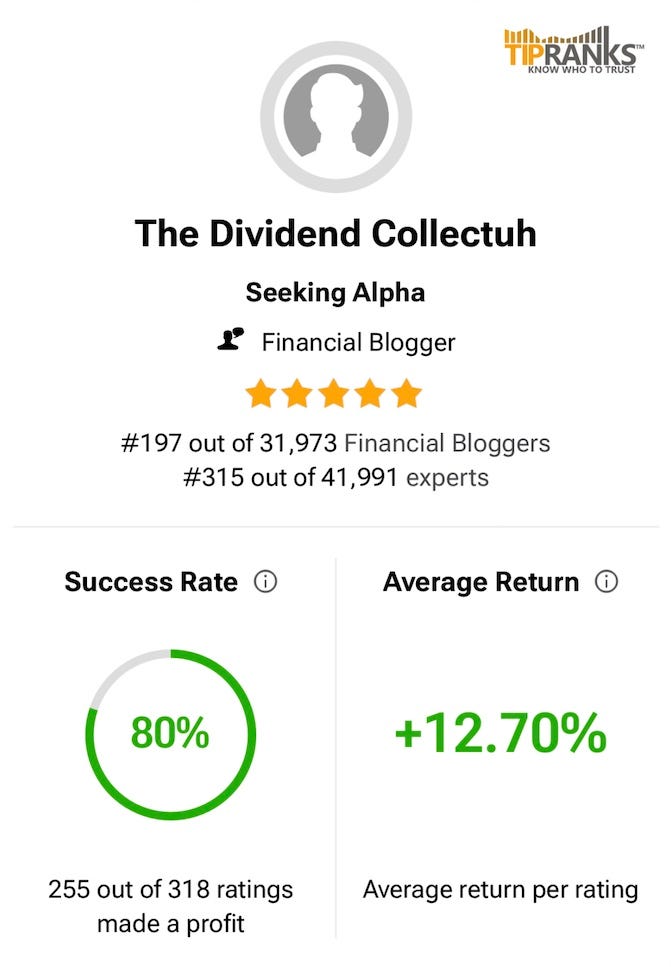
If you’re looking to start investing check out our investment group over on Seeking Alpha.
Here’s How: Click the Seeking Alpha link here. Click investing group, subscribe now, or the blue hyperlink in my bio.
Not financial advice. For educational purposes only. I am not a licensed professional. Do your own due diligence.
Like & subscribe if you’re active duty, a veteran, or just love investing.