

As you know by my name, I love dividends. And in addition to sharing on here, I write regularly on the investment platform- Seeking Alpha.
My goal there is to teach everyday investors about building wealth, so they won’t to need to work to traditional retirement age.
I want to help you take control of your life, have F.I.R.E.
Here at Dividend Collection Agency the goal is to give investors and/or readers a different perspective. We take a simple approach to building wealth. And although investing may seem easy, people often miss opportunities by over complicating it.
But we are here to help.
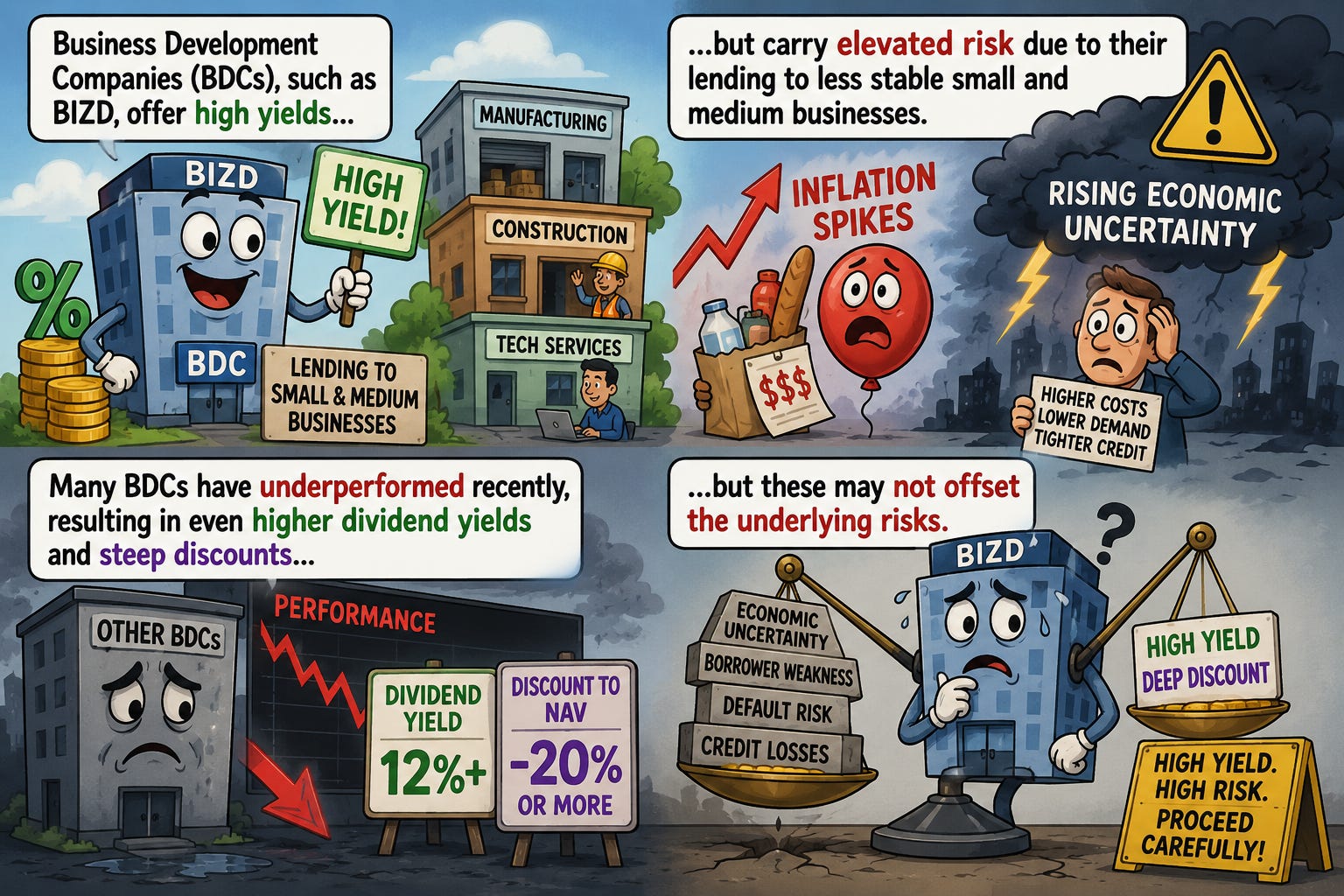
If you’re an income-focused investor like me, you’re probably familiar with Business Development Companies (BDCs). The sector has long been a favorite among dividend investors thanks to its double-digit yields and monthly or quarterly income streams.
Created by Congress in 1980 to improve capital access for small and middle-market businesses, BDCs (BIZD) essentially operate as specialized lenders. They provide financing to companies that are often too small or too risky for traditional banks.
That opportunity comes with tradeoffs.
Unlike banks that primarily lend to financially stronger corporations, BDCs typically finance businesses with weaker balance sheets and less access to capital markets. During periods of economic uncertainty, those borrowers become increasingly vulnerable, raising credit risk throughout the sector.
While many BDCs have underperformed over the past year—pushing dividend yields higher and valuations lower—I remain cautious. Attractive yields and discounts alone aren’t enough to justify the risks.
In this article, I’ll explain why I believe investors should remain selective when investing in BDCs and why patience may prove rewarding over the next 6 to 12 months.
Inflation Is Once Again Becoming a Concern 😰
Inflation has remained one of the defining economic themes since the pandemic.
Although price pressures have moderated from their 2022 peak, recent geopolitical tensions and higher energy prices have renewed concerns that inflation could remain elevated for longer than many investors anticipated.
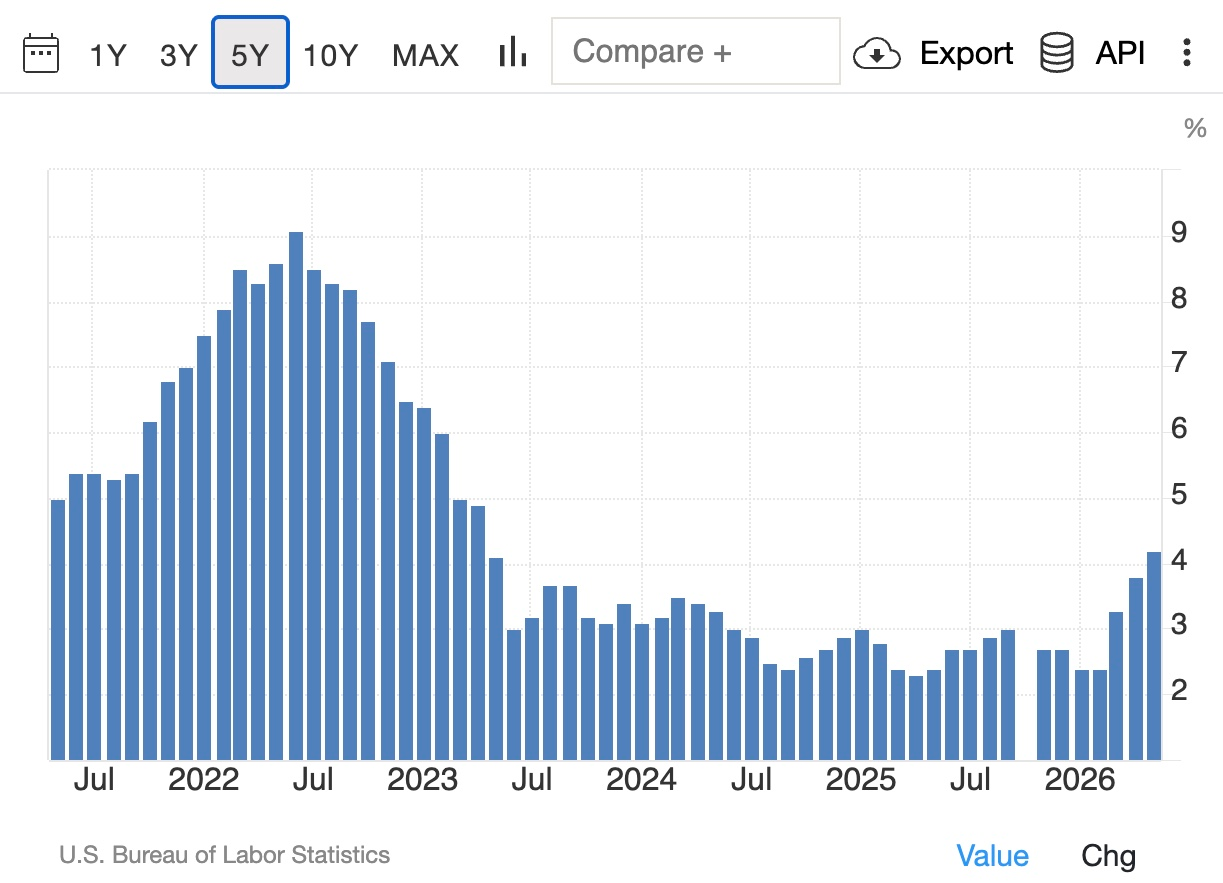
If inflation proves persistent, the Federal Reserve may be forced to keep interest rates higher—or even raise them further.
Ironically, higher rates could provide a short-term boost for many BDCs.
Because most BDCs borrow using fixed-rate debt while lending at floating rates, higher interest rates generally increase investment income and support stronger dividend coverage.
That dynamic helped fuel exceptional earnings and numerous supplemental dividends during the 2022–2023 rate hiking cycle.
However, I believe investors are overlooking another issue that could become increasingly important.
